Ayurvedic Massage Melbourne
Classical Ayurvedic oil massage — practiced in the same way for five thousand years.
(Because some things don't need improving)
Warm organic sesame oil, slow continuous strokes across the whole body, and an hour and a half of unhurried attention. Abhyanga is one of the oldest and most complete healing practices in the Ayurvedic tradition — and at Soma, it's offered in a private studio, exclusively for women.
What is Abhyanga?
In Sanskrit, the word for oil is sneha. It also means love.
That is not a coincidence. Abhyanga — the classical Ayurvedic full-body oil massage — was never understood as a treatment for a specific complaint. It was understood as an act of deep nourishment. The kind that restores something underneath the tired, the held, the braced.
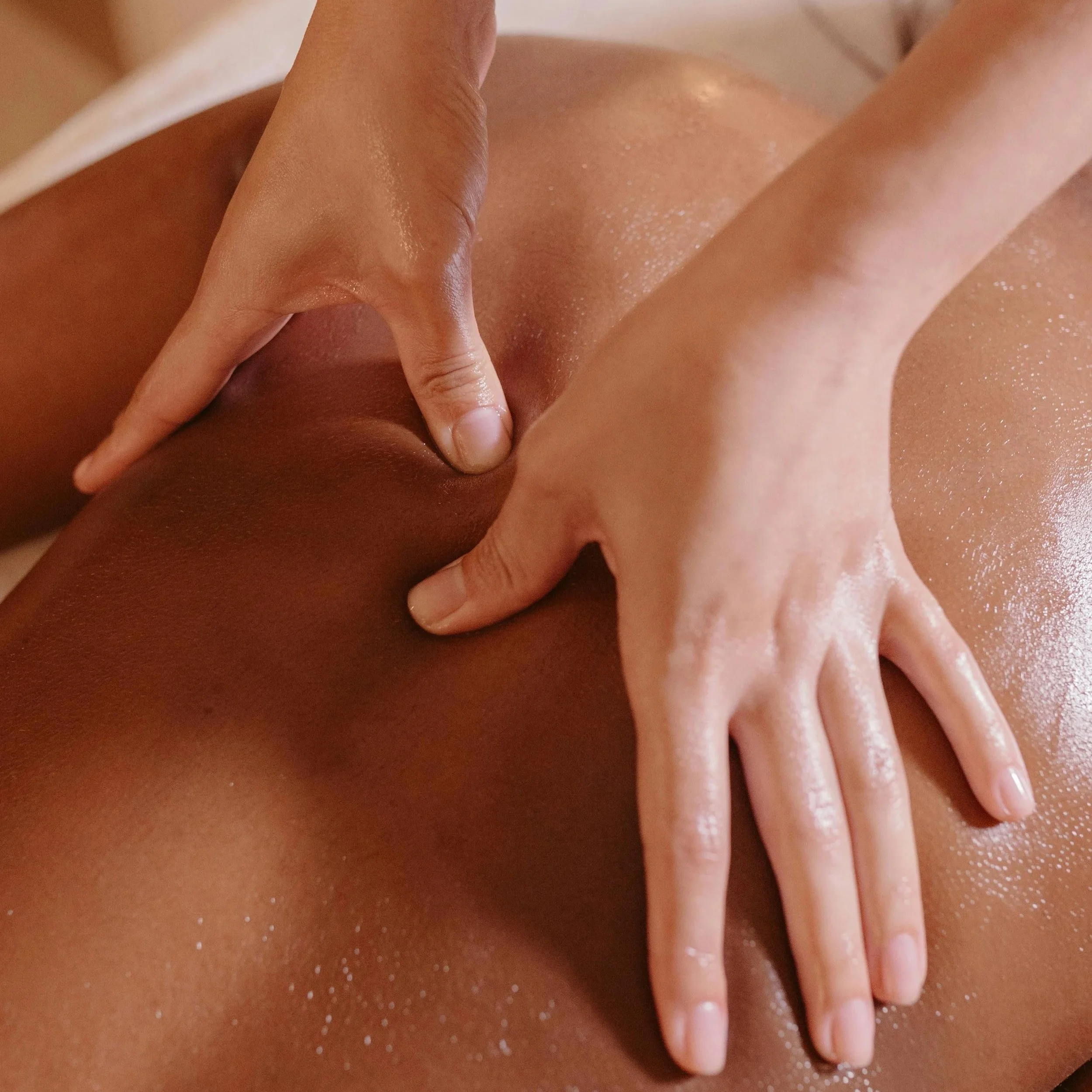
Warm sesame oil is applied with long, slow, continuous strokes. The pace is deliberate. Nothing is rushed or targeted. The oil is chosen for your constitution and current state, and works by absorbing into the tissues rather than simply resting on the surface — reaching the joints, the fascia, the nervous system.
What this tradition understood — and what you may find yourself knowing by the end of a session — is that a body receiving this quality of attention begins to let go. Not because it’s been told to. But because the conditions are finally right.
What to Expect in Your Session:
Your treatment begins with a brief conversation about how you're arriving — your energy, sleep, digestion, any areas of held tension. From this, the oil blend is chosen. At Soma, warm organic sesame oil forms the base, often combined with specific Ayurvedic herbs chosen for your constitution and current state.
Strokes are long, slow and continuous — covering the full body, including the scalp, face, hands and feet. The pace is deliberate. Nothing is rushed. There's no fixed sequence to move through; the treatment is responsive, following what the body is asking for.
Ninety minutes is the minimum for Abhyanga done well. The first twenty minutes or so, the nervous system is still arriving. By the midpoint, something shifts. The kind of letting go that's hard to manufacture — that simply happens when conditions are right.
You'll leave with oil on your skin (this is intentional — the absorption continues for hours). Plan for a gentle afternoon. Nothing requiring much activity.
Who this is for:
Abhyanga is particularly well-suited for:
Women experiencing burnout, depletion or chronic fatigue — the kind that sleep doesn't quite fix. The nourishing quality of warm oil and slow rhythm is deeply restorative for an exhausted system.
Those living with anxiety, a busy mind, or difficulty feeling at home in the body. The steady, continuous contact of Abhyanga has a regulating effect on the nervous system that talk and stillness alone often cannot reach.
Women in transitional life phases — perimenopause, postpartum recovery, periods of grief or change. Ayurveda understands these as times when Vata (the energy of movement and instability) increases, and the body needs warmth, groundedness and nourishment to find its footing.
Anyone who simply needs to receive — not perform, not manage, not get through. Just be held and worked with, well.
Common questions about Abhyanga
What is abhyanga massage?
1
Abhyanga is a classical Ayurvedic full-body oil massage that has been practiced in essentially the same form for over five thousand years. Warm oil — traditionally sesame — is applied with long, slow, continuous strokes across the whole body, including the scalp, face, belly, hands and feet. Unlike most modern massage, abhyanga is not targeted at specific areas of tension. It works by creating the conditions for the whole system to settle: the nervous system, the tissues, the breath. In Ayurveda, the practice is understood as an act of deep nourishment rather than treatment for a particular complaint.
How is abhyanga different from a regular massage?
2
Getting started is simple. Reach out through our contact form or schedule a call—we’ll walk you through the next steps and answer any questions along the way.
What are the benefits of abhyanga massage?
3
Ayurveda describes abhyanga as one of the most complete self-care practices available, with benefits across many layers of the body. Regular abhyanga is understood to nourish the skin and deeper tissues, support joint mobility, promote lymphatic movement, calm an overactivated nervous system, and improve sleep. In modern terms, many of these effects relate to the body's shift from a sympathetic (activated, defended) state into a parasympathetic (restorative) one — a shift that has downstream effects across digestion, immunity, and mood. One session offers a taste. Regular sessions allow something deeper to happen..
What oil is used in abhyanga massage?
4
At Soma, warm organic sesame oil forms the base of every abhyanga treatment. In classical Ayurveda, sesame is considered the most medicinal of oils — deeply warming, heavy enough to penetrate the tissues, and particularly nourishing for vata. Depending on your constitution and what's present at the time of your session, specific Ayurvedic herbal oils may be blended in — chosen through a brief intake conversation when you arrive. The oil is always warmed, always organic, and always chosen with your current state in mind rather than applied as a standard formula.
How often should I get abhyanga massage?
5
In Ayurvedic tradition, daily self-abhyanga is considered an ideal practice — and professional abhyanga once a week or fortnight is the classic recommendation for ongoing wellbeing. In practice, many clients at Soma come monthly, often finding that even this frequency produces a noticeable cumulative effect. For those moving through a period of depletion, transition, or heightened stress, closer together is often more useful than further apart. There is no fixed answer. The body tends to know, and we can talk about it.
Is abhyanga good for anxiety and stress?
6
It is one of the oldest practices in the Ayurvedic tradition specifically for this. Vata imbalance — the Ayurvedic name for what many of us would recognise as the scattered, depleted, wired-but-tired state — is considered the underlying condition that abhyanga addresses most directly. Warm oil applied with slow, continuous contact has a profoundly settling effect on the nervous system. The treatment is not relaxing in a superficial sense. It tends to produce a quality of quiet that most clients describe as unusual — a stillness that persists well beyond the session itself. For women carrying a lot, it often lands somewhere underneath the tired and stays there.
What should I wear, and what can I expect at my first abhyanga in Melbourne?
7
Sessions at Soma are held in a quiet, private studio in Highett. You'll begin with a brief conversation about how you're arriving — your sleep, energy, digestion, any areas of particular tension — which helps determine the oil blend for your session. You'll undress to your comfort level; most clients are fully undressed for the treatment, covered appropriately throughout. Wear or bring clothing you don't mind if a little oil transfers to. After the session, there's time to rest before you dress and leave. It's worth keeping the afternoon clear if you can. Most people find they need it.
Where can I get abhyanga massage in Melbourne?
8
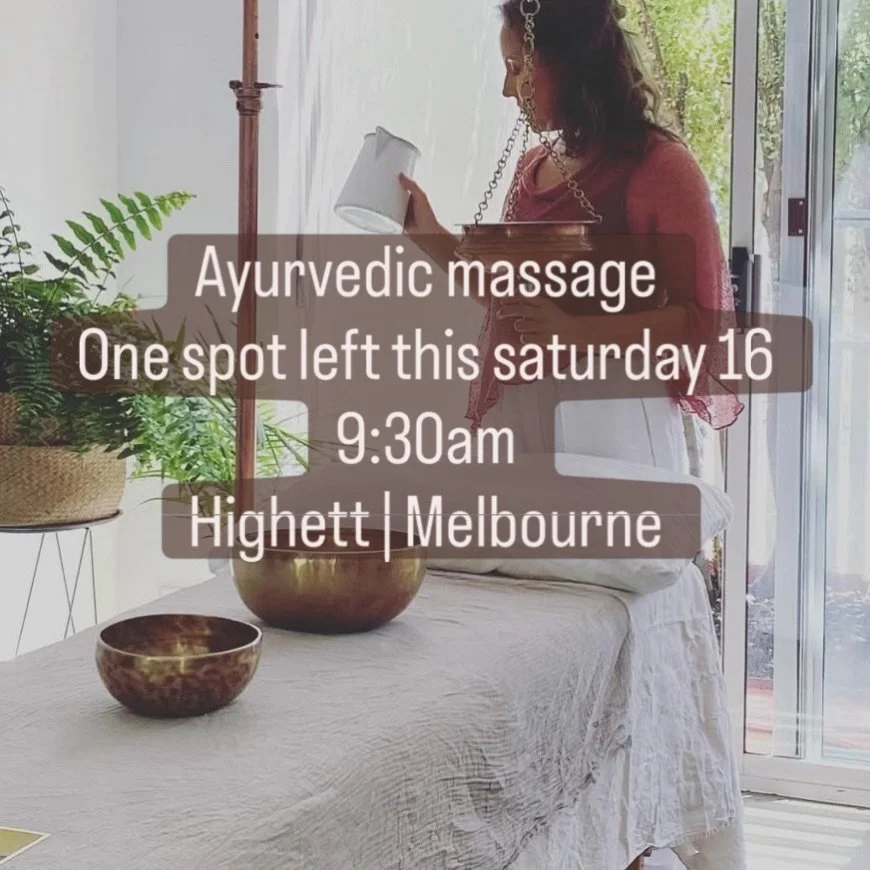
Soma Ayurveda is a private studio for women only in Highett, in Melbourne's inner south, offering classical abhyanga massage exclusively for women. Sessions are 90 minutes minimum, with longer treatments also available. The studio is quiet, contained, and designed around one thing: giving your body the quality of attention it rarely receives. If you're looking for abhyanga massage in Melbourne offered with genuine fidelity to the Ayurvedic tradition, you're in the right place.
"Abhyangam aacharet nityam — sa jara-shrama-vatahan."
"One who practises oil massage daily is not troubled by old age, fatigue, or the disorders of Vata. The body becomes strong, smooth-skinned, and pleasing to the touch."
— Ashtanga Hridayam, Sutrasthana 2:8